Introduction
In an increasingly mobile world, the backpack has become essential for professionals, students, and frequent travelers alike. Whether you’re commuting to the office, heading to campus, or preparing for a business trip, having the right bag can significantly impact your comfort and productivity throughout the day.
The market for laptop backpacks has grown substantially over the past few years, with manufacturers recognizing that today’s workers need more than just a place to carry their devices. They need organized compartments for various items, protective padding for expensive equipment, ergonomic support for daily wear, and enough capacity to handle multiple days’ worth of essentials—all while maintaining a professional appearance.
This guide explores what makes large laptop backpacks suitable for men’s professional and educational use, examining practical features that matter in real-world scenarios. We’ll look at how these bags function across different situations and help you understand which characteristics might align with your specific needs.
Understanding Large Laptop Backpack Categories
Before diving into specific features, it’s helpful to understand how large laptop backpacks fit within the broader category of professional bags. These backpacks typically share several common characteristics: they’re designed to accommodate laptops ranging from 15 to 17 inches, include multiple compartments for organization, incorporate some level of weather resistance, and prioritize comfort through padded straps and back support.
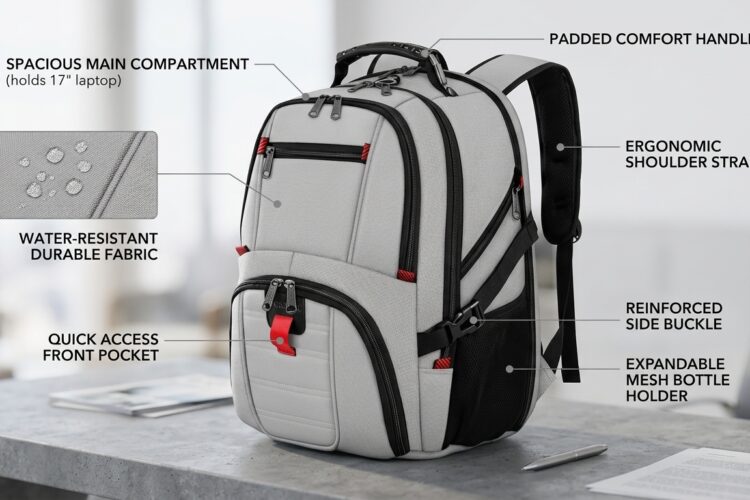
The YOREPEK Large Laptop Backpack falls within this established category, positioning itself as a versatile option for people who need a single bag to handle multiple responsibilities—work, travel, daily commuting, and occasional overnight trips.
Key Features Found in Large Professional Laptop Backpacks
Spacious Main Compartment and Laptop Sleeve
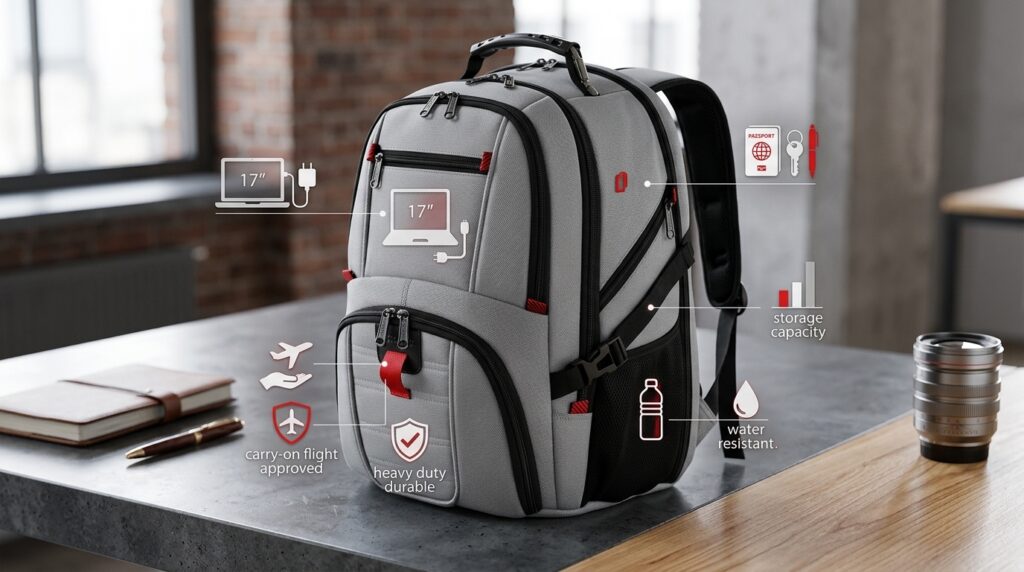
The foundation of any functional laptop backpack begins with adequate storage space and dedicated device protection. A 17-inch laptop capacity represents a substantial size, accommodating most modern laptops and larger tablets. The dedicated laptop compartment serves two purposes: it keeps your devices organized at the top of the bag for quick access, and it provides cushioning to protect expensive equipment from impacts during transit.
The organization of compartments matters significantly in daily use. When you’re moving between meetings, transitioning through airport security, or simply reorganizing at the end of a workday, knowing exactly where specific items are located saves time and reduces frustration.
Organizational Features and Access Points
Professional backpacks for men typically include multiple smaller compartments strategically placed to separate different categories of items. Pockets for phones, keys, chargers, and documents help maintain organization and prevent the frustration of digging through a single large space searching for essentials. Some designs include external pockets that allow quick access to frequently needed items without opening the main bag.
The arrangement of these compartments affects functionality significantly. Front-facing pockets on a backpack make sense for items you access regularly—sunglasses, charging cables, notebooks—while deeper internal pockets work better for documents, travel documents, or items you need less frequently throughout the day.
Water Resistance in Daily Scenarios
Water-resistant materials have become increasingly important for bags used in business and academic settings. This feature extends beyond heavy rainstorms; it helps protect your belongings during casual exposure to moisture—unexpected precipitation on your commute, spillage from a water bottle, or humidity in certain environments.
It’s important to understand what “water resistant” means in practical terms. This designation typically indicates that the material can withstand light to moderate moisture exposure but may not provide protection during prolonged heavy rainfall or complete submersion. Most professionals face light moisture exposure rather than extreme weather, so water-resistant materials meet typical real-world needs.
Carry-On Flight Compliance
One feature that distinguishes certain backpacks from others is their suitability for air travel. Bags designed to meet carry-on dimensions work well for business travelers who prefer to avoid checked baggage fees and the associated hassles. The ability to bring a single bag through security and directly to your gate streamlines the travel experience considerably.
Understanding airline carry-on specifications is crucial here. Different airlines maintain slightly different dimension requirements, though they generally hover around 22 x 14 x 9 inches. A backpack designed with carry-on compliance in mind considers these constraints during the design phase, ensuring that the bag functions well within these limitations.
Practical Usage Scenarios
Daily Commuting for Professional Work
For office workers and consultants, a laptop backpack serves as a mobile office. The ability to transport a laptop, external monitors, documents, charging equipment, and personal items creates flexibility for hybrid work arrangements. Some professionals work from coffee shops, client sites, or co-working spaces, where a well-organized backpack allows them to work productively in various environments.
The ergonomic aspect becomes particularly important here. Commutes that involve walking, public transportation, or cycling put sustained stress on shoulders and the back. Padded shoulder straps and supportive back panels help distribute weight more evenly, reducing fatigue during regular use.
Academic and Campus Use
College students face different demands than office workers, though there’s significant overlap. A student might carry textbooks, a laptop, notebooks, writing supplies, and personal items throughout a campus day that spans multiple hours and locations. The organizational features of a laptop backpack help keep course materials separated and accessible.
Beyond campus, students frequently travel home between semesters or maintain summer internships in different locations. A backpack that functions well for both daily use and occasional travel provides genuine value across these different scenarios.
Business Travel Situations
Business travelers increasingly favor backpacks over traditional rolling luggage for multi-day trips. A backpack that meets carry-on requirements, holds a laptop securely, and provides enough space for several days’ worth of clothing, toiletries, and work materials consolidates what might otherwise require multiple pieces of luggage.
The organizational structure becomes critical in travel scenarios. Keeping work materials separate from personal items, having accessible pockets for travel documents and electronics, and utilizing every cubic inch of space efficiently all contribute to a smoother travel experience.
Transitional Lifestyle and Weekend Trips
Some users need a bag that transitions seamlessly between professional environments and casual weekend adventures. This might include Friday evening trips to nearby cities, outdoor activities where you’re still bringing work equipment, or simply moving between different life contexts throughout the week. A backpack that functions professionally enough for business meetings yet rugged enough for occasional outdoor use fills this niche.
Who These Backpacks Serve Well
Business Professionals and Remote Workers
Professionals who work in various locations benefit significantly from having a organized, professional-looking bag that protects their equipment and allows them to work productively outside traditional offices. This includes consultants, remote workers, people with multiple office locations, and professionals who frequently meet with clients.
College and University Students
Students represent a substantial segment of the laptop backpack market. The combination of academic demands and budget consciousness means students need bags that offer good functionality without excessive cost. The durability requirements are significant, as student backpacks see heavy use across multiple years.
Frequent Business Travelers
People who take regular flights appreciate the carry-on compliance feature and the ability to have all work essentials organized in a single piece of luggage. This eliminates the need to check bags for most business trips, saving time and reducing the risk of luggage mishandling.
Urban Commuters and City Professionals
People who navigate cities using public transportation, bicycles, or on foot benefit from backpacks that distribute weight comfortably and keep hands free. The professional appearance helps these bags transition from commute to office seamlessly.
Tech-Focused Professionals
Professionals who work with multiple devices—laptops, tablets, external drives, portable monitors—appreciate the organizational capacity and protective features designed specifically for electronics.
Important Considerations Before Selecting a Large Laptop Backpack
Sizing and Capacity Reality
While a 17-inch laptop capacity sounds impressive, the actual usable space depends on design efficiency. Some bags with large dimensions waste space through poor compartment design, while others maximize every inch through thoughtful layout. Understanding how much you typically carry helps determine whether a particular bag’s capacity aligns with your needs.
Weight Distribution and Comfort
The weight of the bag itself, plus its contents, directly impacts comfort during extended wear. Heavier materials offer greater durability and weather protection but add to the overall burden. Conversely, lighter materials reduce fatigue but might sacrifice longevity. Finding the right balance depends on your specific use patterns.
Compartment Accessibility Versus Security
More compartments and pockets offer better organization but can sometimes create a false sense of security. A backpack with zippers that only partially enclose pockets, for example, provides quick access but less protection against theft or accidental loss of items. Consider your typical environments and usage patterns.
Material Durability and Maintenance
Different materials require different levels of maintenance. Water-resistant fabrics might need periodic treatment to maintain their effectiveness. Zippers on large packs experience significant stress and warrant attention to quality. Stitching in high-stress areas determines how long a bag will remain functional.
Aesthetics and Professional Presentation
While functionality matters most, the appearance of your backpack contributes to your overall professional presentation. A bag that looks more like outdoor gear might feel out of place in certain office environments, while an overly formal appearance might seem impractical for casual academic settings. Most large professional laptop backpacks occupy a middle ground designed to work across various contexts.
How Large Laptop Backpacks Compare to Other Carrying Options
Versus Rolling Luggage
Rolling luggage works well for those who won’t be navigating stairs, crowded spaces, or uneven terrain. However, backpacks offer superior portability in airports, train stations, and on public transportation. For flights where you’re carrying bags on rather than checking them, a backpack typically fits more conveniently in overhead compartments and allows you to keep your hands free.
Versus Messenger Bags and Shoulder Bags
Messenger bags distribute weight across one shoulder, which can lead to muscle strain during extended use. Backpacks distribute weight across both shoulders and the back, providing more ergonomic support for regular, extended wear. However, messenger bags offer quicker access to items and sometimes present a more refined appearance in very formal professional environments.
Versus Briefcases
Traditional briefcases project a formal image but offer limited capacity and can strain a single arm or hand. Modern hybrid designs attempt to bridge this gap, but dedicated backpacks typically offer more practical storage for the contemporary worker who needs to carry a laptop and multiple accessories.
Versus Duffel and Travel Bags
Unstructured duffel bags lack the organizational compartments and device protection that dedicated laptop backpacks provide. They work reasonably well for pure travel but fall short as daily work bags. Laptop backpacks represent a middle ground—specialized enough for professional electronics but versatile enough for travel.
Practical Features That Impact Daily Experience
Padding and Comfort Engineering
The shoulder straps, back panel, and various padding systems are what determine whether a backpack feels comfortable after several hours of wear. Adequate padding in these areas reduces pressure points and distributes weight more evenly. Some designs include air mesh backing that improves ventilation and comfort, particularly important for those who walk or bicycle regularly.
Access Points and Workflow
How quickly and easily you can access your laptop, documents, and charging equipment impacts productivity throughout the day. A well-designed backpack considers the typical workflow—opening your laptop to work, accessing a charger during the day, pulling out a notebook for notes—and positions compartments accordingly.
Durability of Key Components
The most vulnerable parts of any backpack are typically the zippers, stitching at stress points, and where the straps attach to the main body. High-quality materials in these areas extend the functional lifespan significantly. Also consider the durability of the water-resistant coating and how it holds up over time with regular use.
Portability and Weight Handling
A large backpack’s total weight—both the bag itself and its typical contents—matters during daily use. An overstuffed backpack can cause posture issues and discomfort. Understanding how much your typical daily load weighs helps determine whether the backpack’s capacity is actually practical for your situation.
Frequently Asked Questions About Large Professional Laptop Backpacks
Q: Can I actually use a laptop backpack for travel, or should I buy separate bags? A: A quality laptop backpack designed with travel in mind can genuinely serve as a primary bag for multi-day trips. The key is understanding your packing habits and whether the capacity meets your needs. For minimalist travelers, a single backpack works perfectly. Those who pack heavier might still benefit from additional luggage.
Q: How do I maintain water-resistant materials? A: Most water-resistant backpacks maintain their effectiveness through regular cleaning and occasional reapplication of water-resistant coating products. Check the manufacturer’s recommendations for specific care instructions. Regular cleaning prevents dirt buildup that can compromise the material’s water-resistant properties.
Q: Will a carry-on compliant backpack feel too small for daily use? A: Carry-on dimensions can accommodate substantial daily loads for most professionals and students. The key is efficiency in how you use the space. A well-organized carry-on backpack often holds more usable items than a larger, poorly designed bag.
Q: Is a laptop backpack appropriate for business meetings? A: Modern professional laptop backpacks are designed to look appropriate in business settings. The key is selecting a style and color that aligns with your workplace culture. Many contemporary offices accept functional backpacks as normal professional attire.
Q: How do I determine if a bag will fit my laptop? A: Check both the stated laptop size capacity and the internal sleeve dimensions. A bag rated for 17-inch laptops should accommodate most modern laptops comfortably, but verifying measurements prevents surprises. Consider whether you’ll use a separate laptop sleeve, which would take additional internal space.
Q: Can I use a laptop backpack for outdoor activities? A: Many laptop backpacks incorporate outdoor-appropriate features like water resistance and durable materials. However, they’re optimized for professional use rather than technical hiking or climbing. For serious outdoor activities, a dedicated hiking backpack might serve better, though many people use professional laptop backpacks for casual outdoor trips successfully.
Q: Are expensive backpacks always better? A: Price correlates with quality and materials but doesn’t guarantee a backpack will meet your specific needs. A moderately priced backpack with features aligned to your usage patterns often serves better than an expensive bag optimized for different needs. Consider functionality and durability relative to cost.
Conclusion
Selecting a large laptop backpack involves understanding both your practical needs and how different features impact your daily experience. Whether you’re a student carrying campus books and electronics, a professional moving between offices and meeting spaces, or a business traveler seeking a carry-on solution, the right backpack can genuinely improve your productivity and comfort.
The key lies in moving beyond marketing language and understanding what features actually matter for your specific situation. A backpack’s capacity matters less if the compartments don’t match your workflow. Water resistance provides value only if you encounter moisture regularly. Carry-on compliance matters primarily if you travel frequently by air. By aligning a backpack’s features with your actual needs, you make a selection that serves you well across multiple years and contexts.
Large professional laptop backpacks have evolved into genuinely versatile tools that serve multiple purposes across work, academic, and travel contexts. Taking time to understand your requirements and how different features address them leads to a more satisfying purchase and longer-term value.