Introduction
The humble backpack has undergone a remarkable transformation over the past decade. What was once synonymous with weekend hiking trips or college students hauling textbooks has evolved into a sophisticated piece of everyday gear for professionals, remote workers, and frequent travelers. Today’s backpacks blend ergonomic design, security features, and technological integration to support the demands of modern life—where work happens in coffee shops, airports, and co-working spaces just as often as it happens in traditional offices.
When selecting a backpack, especially one that needs to accommodate expensive electronics like laptops, the decision becomes more consequential. You’re not just choosing a bag to carry your belongings; you’re selecting a protective container for your livelihood, a organizational system that affects your daily productivity, and an accessory that reflects how you approach work and travel. This guide explores what makes certain backpacks stand out, what features actually matter, and how to think about selecting one that aligns with your specific needs.
Understanding the Modern Travel and Work Backpack
The category of travel and work backpacks occupies an interesting middle ground. These aren’t ultralight hiking packs designed purely for outdoor adventures, nor are they sleek urban commuter bags that prioritize fashion over function. Instead, they’re designed as all-purpose solutions—capable of holding a laptop and professional materials, durable enough for frequent travel, yet comfortable enough for daily wear around the office or campus.
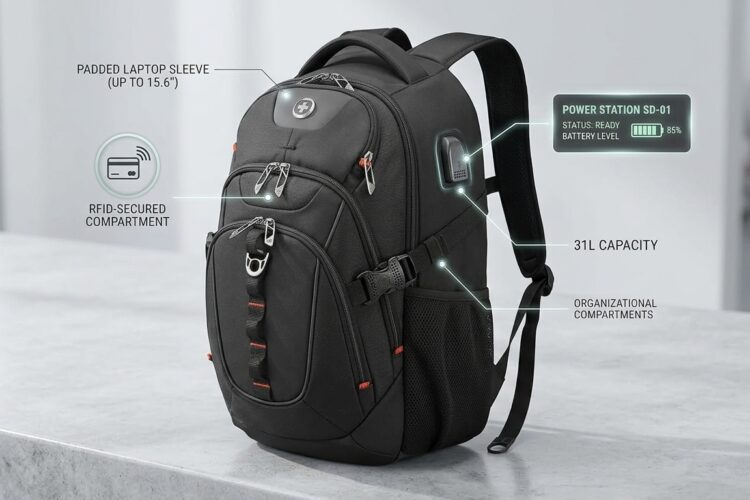
A 31-liter capacity, which sits at the upper end of what most airlines allow as personal carry-on luggage, represents a thoughtful size choice. It’s substantial enough to accommodate a laptop, several days’ worth of clothing, toiletries, and work materials, yet compact enough to avoid becoming unwieldy or overstuffed. This size category works particularly well for people who travel regularly but don’t need a full-size luggage solution, or for students and professionals who need a single bag that transitions seamlessly between class, work, and travel scenarios.
Key Features That Define This Category of Backpack
Laptop Compartment Design and Protection
The most critical feature in any bag designed for professionals is how it protects electronic devices. A dedicated laptop compartment that separates your computer from other items serves multiple purposes. It prevents your device from being jostled against sharp objects, it keeps it isolated from liquids that might be in your bag (a water bottle that leaks, or coffee from a morning meeting), and it often features padding that absorbs shock from bumps and falls.
The specification indicating this backpack fits 15-inch laptops addresses a common size range. This is worth understanding because laptop sizes vary—smaller ultraportables might be 13 inches, while workstations and some professional-grade machines can be 17 inches or larger. A 15-inch rating typically means the compartment is designed with that size in mind, though it may accommodate slightly smaller devices as well.
USB Charging Port Integration
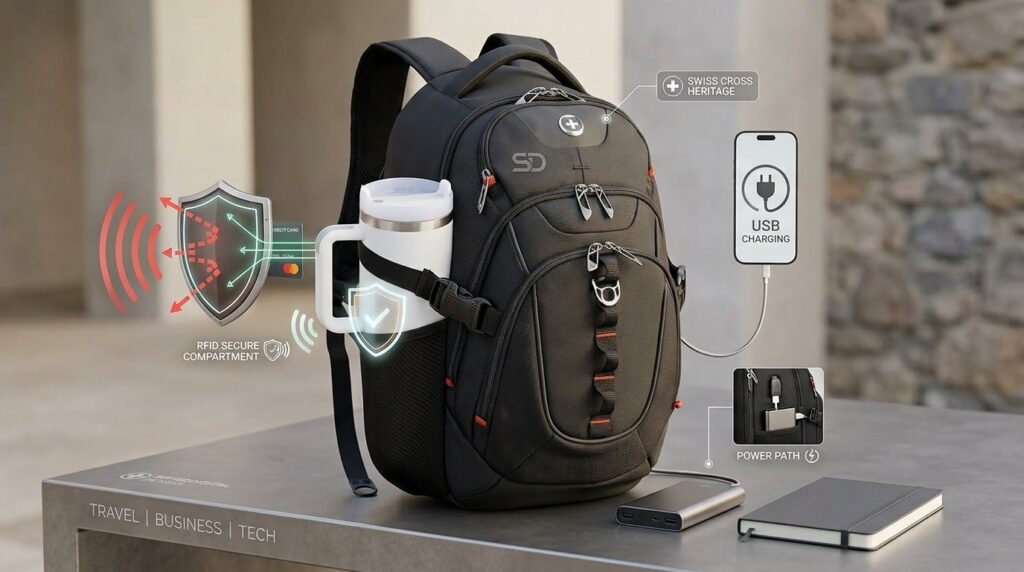
The inclusion of a USB charging port represents a response to a genuine need in modern work life. Rather than needing to locate a wall outlet or dig through your bag to connect a power bank with cables, a front-mounted USB port allows you to charge devices while the backpack is on your back or sitting beside you. This requires that you bring your own power bank and USB cable (which the port facilitates rather than provides), but it significantly improves the practicality of maintaining device charge throughout a workday or while traveling.
This feature appeals particularly to people who spend extended time away from traditional power sources—travelers with long layovers, students on campus all day, or professionals attending conferences and events.
RFID Protection Pockets
Radio-Frequency Identification (RFID) technology is used in modern credit cards, passports, and identification documents. While most cards have some built-in security, RFID-blocking pockets add an extra layer by using specialized materials that prevent wireless scanning of your documents.
Whether RFID protection is a critical necessity depends on your level of risk and your peace of mind preferences. Statistically, RFID skimming is relatively uncommon compared to other forms of identity theft, but for frequent international travelers or those carrying high-value information, the feature adds genuine security value. It’s the kind of thing that’s nice to have even if you never need it.
Organizational Compartments and Pockets
A backpack’s usability hinges significantly on its internal organization. Multiple compartments allow you to segregate different types of items—documents in one section, cables and chargers in another, personal items in a third. This prevents the common frustration of everything becoming jumbled together and having to excavate through the entire bag to find what you need.
External pockets serve similar purposes while providing quick access to frequently used items. A front pocket, side pockets for water bottles, and organizational slots for pens and smaller items collectively transform a backpack from a basic carrying vessel into a functioning office or travel kit.
Build Quality and Material Selection
Backpacks designed for frequent travel and professional use typically employ robust materials. Quality stitching, reinforced stress points, and water-resistant or water-repellent fabrics all contribute to longevity. A backpack is an investment in your daily function—cheap materials that deteriorate after a few months of regular use ultimately cost more than selecting something built to last several years.
How This Type of Backpack Fits Into Different Lifestyles
The Frequent Business Traveler
Someone who travels quarterly or monthly but isn’t constantly on the road finds this size particularly useful. A 31-liter bag accommodates three to four days of clothing, toiletries, electronics, and documents—enough for short business trips without checking luggage. The laptop compartment is essential for protecting equipment that generates your income, and the USB charging capability is genuinely valuable during airport layovers or while working in transit.
The College Student
Academic life involves carrying laptops to class, moving between libraries and dormitories, and occasionally traveling home or on study trips. A backpack that reliably fits a 15-inch laptop and provides ample organization for textbooks, notebooks, and course materials addresses the core need. The durability consideration matters here because a college backpack typically gets 4-5 years of heavy use.
The Remote Worker with Mobile Workspace
As work-from-anywhere becomes more normalized, some professionals spend time working from various locations—home, coffee shops, co-working spaces, clients’ offices. A well-designed backpack enables seamless transitions between these spaces, carrying your laptop, chargers, and any materials you need while maintaining organization and protection.
The Adventure-Minded Professional
Some people blur the line between professional work and outdoor activities. A backpack that can serve as a conference bag during the week and accommodate climbing gear or hiking supplies on the weekend represents efficient gear selection.
Important Considerations When Selecting This Type of Backpack
Comfort and Ergonomics
A backpack is only useful if you can actually wear it comfortably. This involves padded shoulder straps that don’t dig into your shoulders, a supportive back panel that distributes weight properly, and ideally a chest strap or waist belt that transfers some weight from your shoulders to your core. The most common mistake people make is selecting a backpack based purely on features while ignoring how it actually feels when worn.
Comfort becomes exponentially more important if you’re carrying this bag daily or during long travel days. A backpack that feels fine for a short walk might cause shoulder pain after wearing it for six hours.
Weight Capacity Versus Personal Comfort
While a 31-liter backpack can technically hold more, there’s a difference between capacity and comfortable carrying weight. Overstuffing a backpack doesn’t just look awkward—it strains the materials, makes wearing it uncomfortable, and can even contribute to postural issues. Understanding how much you actually need to carry and selecting a bag that accommodates that without encouraging overpacking is more practical than chasing maximum capacity.
Maintenance and Cleaning
Backpacks accumulate dirt, dust, and stains, particularly if you travel frequently. Understanding how to clean your particular bag—whether water-resistant materials can be wiped down easily, whether you can access compartments for debris removal, whether the bag is machine-washable or requires hand cleaning—affects your long-term satisfaction with it.
Aesthetics and Professional Appearance
While function matters most, aesthetics aren’t irrelevant. If you’re carrying a backpack into client meetings or formal professional settings, its appearance influences first impressions. Some backpacks read distinctly casual or sporty, while others are designed with a more professional aesthetic. What matters is alignment between your environment and the bag’s design.
Comparing Backpack Styles and Categories
The backpack market encompasses several distinct categories, each optimized for different purposes:
Urban Commuter Backpacks prioritize style and typically have smaller capacity (15-25 liters). They work well if you’re moving between fixed locations daily but lack the robust protection and expandability for actual travel.
Hiking and Outdoor Backpacks emphasize lightweight materials, ventilated back panels, and sometimes hydration bladder compatibility. They excel in outdoor contexts but often feel overly technical for professional or academic environments.
Traditional Laptop Bags and Messenger Bags offer a different ergonomic approach, distributing weight across your body differently than backpacks. Some people find them more comfortable for work settings, though they don’t scale well for multi-day travel.
Expandable Travel Backpacks in the 30-40 liter range split the difference, offering enough capacity for actual travel while maintaining professional appearance and comfort. This category represents where most modern work and travel backpacks sit.
The choice between these categories depends on your primary use case. Someone commuting to a fixed office daily has different needs than someone with frequent travel, who has different needs than someone in academic environments.
Frequently Asked Questions About Work and Travel Backpacks
How much can a 31-liter backpack realistically hold? A 31-liter backpack holds roughly equivalent to a small carry-on suitcase. In practical terms, that’s a laptop, 3-4 days of clothing, toiletries, cables, and documents. However, the actual feeling of “full” comes well before hitting maximum capacity—a comfortable load is typically 60-70% of total capacity.
Is a USB charging port actually useful, or is it just a gimmick? The utility depends on your habits. If you’re someone who works remotely from various locations and regularly needs device charging, it’s genuinely useful. If you typically have access to wall outlets, it’s less critical. The important thing to understand is that it requires you to carry a separate power bank and USB cable—the port is just the interface.
Do I really need RFID protection? It’s a genuine security feature with real use cases, particularly for frequent international travelers. That said, standard credit card security has improved, and statistically, RFID skimming is less common than other fraud types. It’s valuable as additional security but shouldn’t be the primary decision point.
How do I know if a backpack will be comfortable for me? This is genuinely difficult to answer without trying on backpacks. General guidelines include looking for padded shoulder straps at least 1.5 inches wide, a supportive back panel, and the ability to adjust straps to your frame. If possible, try on multiple options with weight in them to evaluate comfort realistically.
What’s the actual lifespan of a quality backpack? With proper care, a well-constructed backpack typically lasts 5-10 years of regular daily use. This varies based on material quality, how frequently it’s used, and environmental conditions (someone traveling constantly in harsh climates will see shorter lifespan than someone using it for occasional commuting).
Can I use this type of backpack for actual hiking or outdoor activities? That depends on the specific backpack and the specific activities. A 31-liter work/travel backpack might handle day hikes or light camping, but it lacks many features of true outdoor backpacks (like ventilated back panels, proper weight distribution systems, and attachment points for gear). Using it occasionally for these purposes is fine, but if outdoor activities are a primary use case, a dedicated outdoor pack might be more appropriate.
Making Your Decision: What Actually Matters
Selecting the right backpack comes down to honest assessment of your needs. Ask yourself these questions:
What’s your primary use case—daily commuting, frequent travel, academic settings, or a combination?
How much are you willing to prioritize style versus raw functionality?
Do you have any specific features that address genuine pain points in your current situation?
What’s your realistic budget, and how long do you expect to use this bag?
Can you try it on and wear it with realistic weight to evaluate comfort?
Once you’ve answered these questions, you’ll have far more clarity about whether any particular backpack makes sense for your situation.
Conclusion
The evolution of backpack design reflects broader changes in how we work and travel. Modern backpacks aren’t afterthoughts or generic carry vessels—they’re thoughtfully engineered products that balance protection, organization, comfort, and durability. A 31-liter capacity backpack with dedicated laptop protection, practical charging solutions, security features, and professional organization represents the current standard for people who work in multiple locations or travel frequently.
The right choice isn’t about finding the objectively “best” backpack—it’s about finding the one that best serves your specific lifestyle, feels comfortable when worn, and addresses your genuine needs without unnecessary features that inflate the price tag.
Whether you’re a student managing campus life, a professional working across multiple locations, or someone who simply values having one reliable bag that handles everything life throws at it, understanding these features and how they contribute to functionality helps you make an informed decision.